Criminal Case: Save the World!
- 4.7
- Rating
- 10.00M
- Installs
- Free
- Price

 Analysis by App-foxy
I approached Criminal Case: Save the World! as a short-session adventure game rather than something to play like a traditional console mystery. Its central appeal is simple: investigate murder cases, examine scenes, question characters, and work toward a solution while moving through stories set in different parts of the world. The free entry point makes it easy to try, but the experience is built around repeated investigation tasks, waiting between progress steps, and optional spending.
That combination matters when deciding whether it belongs on your phone. I found it most enjoyable when I wanted a compact detective routine during a break, not when I was looking for a fast, fully interactive crime thriller. The game comes from Pretty Simple and has grown into a well-established adventure title, with a 4.7 average from around 167 thousand ratings and over 10 million installs. Those figures suggest a broad audience, but they do not remove the need to understand its particular rhythm before downloading it.
How the investigation works in everyday play
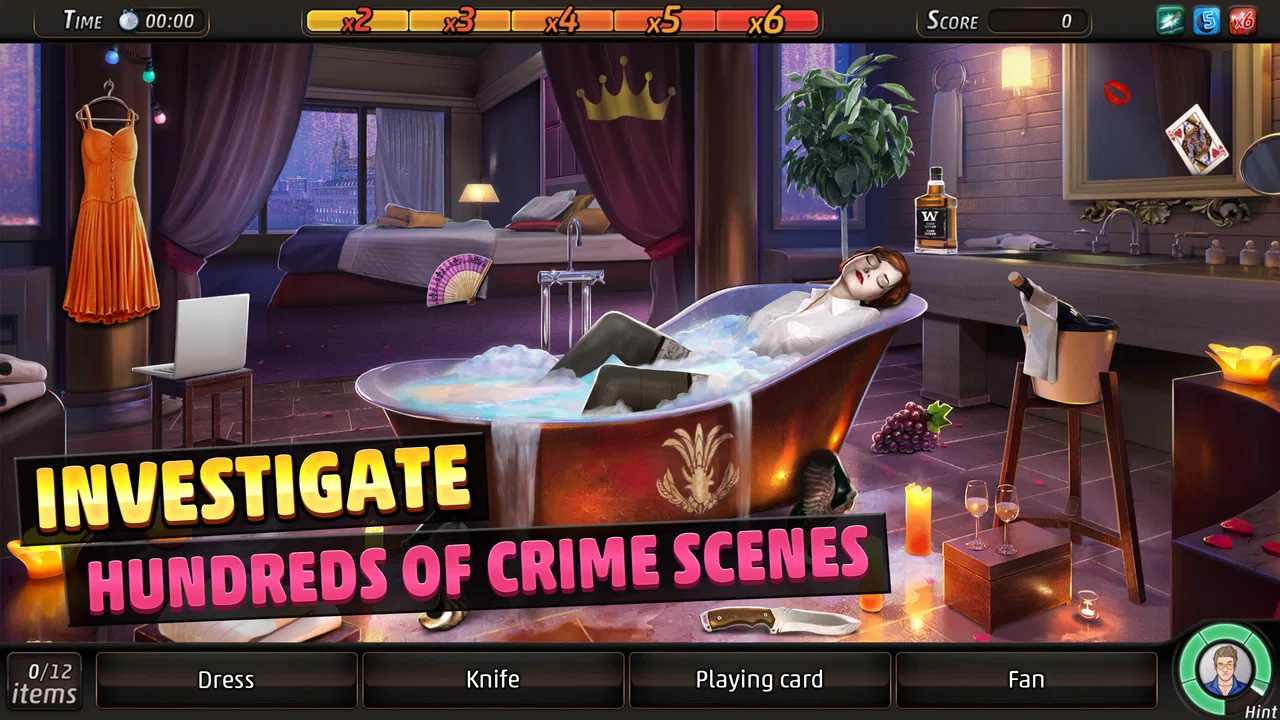
The basic loop is easy to understand. A case sends me to a crime scene, where I search for objects and clues. After that, I use the evidence to move the investigation forward, interact with suspects, and unlock the next part of the story. The hidden-object scenes are the heart of the experience, while the case narrative gives those searches a reason to exist.
You May Also Like

 Pandora - Music & Podcasts
Pandora’s Music Is Easy to Start, but Harder to Recover
Pandora’s strength is its low-effort path from a seed to a station. Its weak spot is how much confidence it asks you to place in connection, setup, and quiet recovery.

 8 Ball Pool
 Is Built on Rivalries, Rematches, and Routine
A close look at the rivalries, rematches, shared routines, and unanswered safety questions that turn a quick pool match into a persistent mobile community.

 Samsung Music
’s Quiet Strength Is Playing What You Already Own
Its reach comes less from spectacle than from dependable access to a personal library. That simplicity is both the app’s strongest retention engine and its ceiling.

 AccuWeather: Weather Radar
AccuWeather Review: A Quick, Clear Forecast for Everyday Decisions
For everyday plans, the best forecast is the one you can understand quickly. AccuWeather makes rain timing, radar, and local conditions easy to act on, with a few trade-offs.

 Hill Climb Racing
Why Hill Climb Racing Still Turns Crashes Into One More Run
A tiny car, a bumpy hill and one more upgrade: Hill Climb Racing keeps resurfacing because its simple chaos makes every near-miss feel personal.

 AliExpress - Shopping App
AliExpress Makes Global Shopping Feel Personal, but Shoppers Bear the Risk
AliExpress turns a global marketplace into a pocket-sized discovery engine. Its reach is useful, its shopping loop compelling, and its trade-offs easy to miss.
More From Our News Desk
View All News


That structure makes the game approachable even if you do not normally play adventure games. I never need to learn a complicated control scheme or memorize a large set of commands. Most actions are based on tapping the screen, choosing an option, or locating something in an illustrated scene. The challenge comes less from reflexes and more from attention, patience, and remembering what the case has already revealed.
One useful way to play is to treat each scene as an observation exercise instead of tapping randomly. I scan from one side to the other, look for unusual shapes, and only use assistance when I have genuinely searched the area. This approach reduces wasted energy and makes the investigation feel more satisfying. It also helps players who find rapid visual searching tiring because it turns a frantic hunt into a repeatable method.
The worldwide setting gives the cases a sense of variety. The locations and characters change, so the game does not feel like one single room revisited forever. Still, the underlying actions remain familiar. If you expect every case to introduce a radically different type of gameplay, the repetition may become noticeable. I see the changing stories as the main source of freshness, not a constant stream of new mechanics.
A realistic use case is a commute, a lunch break, or a few minutes at home while waiting for something. I can complete a small portion of an investigation, put the phone away, and return later without needing the same level of concentration demanded by a long action game. On the other hand, the game is less suitable when I want a mystery that keeps me fully engaged for an uninterrupted evening. Its pacing is deliberately segmented, and that can make a dramatic case feel slower than its subject matter suggests.
Readable scenes and straightforward navigation
From a navigation perspective, the game is uncomplicated. The investigation flow generally guides me from the crime scene to evidence, characters, and the next objective. That is valuable for players who dislike menus filled with nested options. I spend more time looking at the case than trying to work out where the next button is.
The illustrated scenes are designed around visual recognition, so readability depends heavily on the phone or tablet being used and on the amount of detail packed into the image. On a larger screen, small objects are easier to separate from the background. On a compact phone, cluttered scenes can demand more concentration, particularly when several items share similar colors or outlines.
I recommend playing with the device held steadily and with the display brightness adjusted to the surroundings. A dim screen can make dark objects blend into the background, while excessive brightness may make a long session uncomfortable. These are simple changes, but they have a bigger effect here than in a game with large interface buttons and bold shapes.
The text and clues also deserve attention. The story gives context to the investigation, but players who read quickly may be tempted to skip dialogue and focus only on the next task. I found that a slower pace improved the experience because the case felt less like a sequence of object searches. If you are playing in a noisy place, however, the visual parts are easier to follow than any story detail that requires sustained reading or careful interpretation.
There is a practical advantage in the clear separation between searching and progressing. I can concentrate on the scene first, then deal with the result afterward. That separation is helpful for someone who becomes overwhelmed when several kinds of information appear at once. It also makes the game friendly to occasional players who need a moment to remember what they were doing after returning from a break.
Motor demands, visual strain, and sensory comfort
The controls are primarily tap-based, which removes the need for precise swipes, virtual joysticks, or rapid button combinations. For me, that makes the game less demanding than many action adventures. A player with limited interest in fast reactions can still participate in the investigation because success is based mainly on finding objects and following the case.
That does not mean the game is effortless for every motor profile. Searching a detailed scene can involve repeated taps, and small targets may require more precision than large menu controls. Someone who experiences hand fatigue may prefer shorter sessions rather than trying to finish every available task at once. Resting between scenes is not just sensible; it can preserve accuracy and prevent the search from becoming frustrating.
The visual design creates a different kind of demand. Hidden-object gameplay naturally asks the eyes to compare shapes, colors, and positions across a busy image. Players with reduced vision, difficulty distinguishing similar colors, or sensitivity to visual clutter may find some scenes harder than the story itself. I would not choose this game as a first recommendation for someone who needs consistently large, high-contrast targets.
There is also a sensory consideration that is easy to overlook: the game can encourage repeated looking at small details. In a quiet room, that is manageable. In a moving vehicle or a bright outdoor setting, it may be tiring to keep the image stable and distinguish the clues. I get better results when I play while seated, especially during a longer investigation session.
For players who prefer low-pressure interaction, the lack of reflex-heavy action is a genuine strength. A child who is old enough for the content rating but does not enjoy combat may find the detective format more comfortable than an adventure game built around chasing or fighting. The Teen rating still matters, though. The subject is murder investigation, so this is not a light puzzle game for every younger player or every family setting.
Another useful habit is to avoid treating the energy or progression system as a race. When I rush because I want to clear a case immediately, the visual search becomes less accurate and the experience feels more like a chore. Taking a break lets me return with fresher attention. This is one of the few ways the player can actively reduce the strain created by the game’s repeated searching.
Playing in short sessions and around real-life limits
The free price makes experimentation straightforward, but free does not mean frictionless. The game includes in-app purchases ranging from $0.99 to $99.99 per item, so anyone managing a family device or a personal budget should approach optional purchases deliberately. I would not hand the phone to a child without discussing purchase controls first, especially because the desire to continue a case can make a small shortcut feel tempting.
The progression design is better suited to players who accept pauses. If you want to play continuously until a mystery is solved, interruptions can weaken the suspense. I found the game more enjoyable when I used it as a recurring activity: investigate a scene, read the next development, then stop before the repetition became tiring. That approach also works well for people whose concentration varies during the day.
It is available as a free adventure game for devices running Android 7.0 or later, and the current version is 2.45.1. In practical terms, that makes it accessible to many older Android devices, though the quality of the experience still depends on screen size, performance, and how comfortably the device handles detailed scenes. I would check the available storage and device responsiveness before committing to long sessions on an older phone.
The game can fit several contexts that a more demanding alternative cannot. A parent waiting outside an appointment, a commuter with a few spare minutes, or a casual player who wants one more clue before bed can all find a natural use for it. It is less appropriate when the phone is being used while walking, when attention must remain on traffic, or when motion and glare make small visual targets difficult to inspect safely.
Compared with a conventional point-and-click adventure, this game is easier to pick up but usually less focused on free exploration and complex puzzle chains. Compared with a pure hidden-object title, it provides more narrative motivation through its cases and suspects. Compared with a fast action mystery, it asks for much less coordination but offers less urgency. The best alternative depends on what you value: story depth, visual searching, or immediate action.
Where inclusion works well and where it stops
The strongest inclusive quality is its low mechanical barrier. I do not need quick fingers, advanced gaming knowledge, or a controller. The case structure is understandable, and the repeated format lets me learn the game through practice. Players who prefer predictable routines may appreciate knowing what kind of task comes next.
Another positive is that the game supports different attention patterns better than a continuous action title. I can pause between investigations and return without having to remember a complicated control sequence. That makes it a reasonable choice for people who play in short bursts or who find long, uninterrupted sessions difficult.
Still, the visual search is not equally comfortable for everyone. Small clues, busy backgrounds, and the need to distinguish objects from decoration create real barriers. The game’s core mechanic cannot be separated from those demands, so a player who struggles with detailed visual scanning may find that the central activity remains tiring even when the menus are easy to understand.
The story content creates another boundary. Murder cases and a Teen rating may be unsuitable for younger children, sensitive players, or anyone looking for a relaxing, nonviolent theme. The presentation is framed as investigation rather than an action spectacle, but the subject matter still shapes the mood. I would consider the player’s comfort with crime fiction before recommending it as a family game.
Spending and pacing can also affect access. Someone who wants uninterrupted progress may feel pushed toward waiting or optional purchases, while a player who is happy to play slowly may see those same limits as manageable. My advice is to decide in advance whether you are willing to wait. If the answer is no, the game may become irritating regardless of how much you enjoy the cases.
For a more inclusive setup, I would use the largest comfortable screen available, play in stable lighting, take breaks during dense searches, and avoid playing in distracting or moving environments. I would also keep purchases protected and explain the game’s Teen content before a younger person starts. These steps do not change the design, but they can make its strengths easier to enjoy and its limitations less surprising.
Who should download it
I would recommend it to someone who likes crime stories, hidden-object scenes, and progress that arrives in manageable pieces. It is especially suitable for casual players who enjoy checking a case during spare moments and do not need constant action. The worldwide case structure gives the routine enough narrative movement to encourage another session.
I would be more cautious with players who want deep deduction, open-ended investigations, or a mystery where every conclusion comes from combining clues in a complex way. The game’s satisfaction comes from completing its investigation flow, not from simulating the full freedom of a detective’s work. If you want to test several theories without being guided, a traditional narrative adventure may be a better fit.
I would also skip it for anyone who strongly dislikes energy-style pacing, repeated visual searches, or optional purchase prompts. The free download is a useful invitation to try the game, but the long-term experience asks for patience. Players who prefer a single upfront purchase and a completely uninterrupted campaign may feel more comfortable with a premium adventure instead.
For me, the deciding question is simple: do you enjoy looking closely at a scene and making steady progress through a case? If yes, the format is easy to settle into. If you need fast movement, large uncluttered targets, or a mystery built around unrestricted exploration, the same design choices will feel limiting rather than welcoming.
My inclusive verdict
Criminal Case: Save the World! is a friendly entry point into mobile detective adventures because its controls are simple, its cases provide clear direction, and its short-session format fits ordinary life. Pretty Simple has built an experience that does not require quick reactions, but it does require patience and sustained visual attention.
The game is free to start, carries a Teen content rating, and has an average rating of 4.7 from around 167 thousand ratings. I see its popularity as understandable: the combination of crime stories and hidden-object searching is immediately readable, and the changing locations help the formula stay inviting. Its scale, with over 10 million installs, also reflects how easily it can fit into a casual mobile routine.
My honest recommendation comes with conditions. Choose it if you want guided investigations, relaxed tapping, and stories that can be enjoyed in small portions. Use a comfortable screen, take breaks, and decide how you will handle optional purchases before you get invested in a case. Look elsewhere if visual clutter, waiting, Teen crime themes, or repeated searches are likely to outweigh the appeal of solving another murder.
As a lightweight adventure game, it succeeds more through accessibility of interaction than through complexity. I would gladly keep it available for spare moments, but I would not present it as a substitute for a deep detective simulation or a fully uninterrupted mystery novel in game form. Its best audience is the player who enjoys a clear routine, notices details, and is happy to let the investigation unfold one manageable step at a time.
FAQs for Criminal Case: Save the World!
01What is Criminal Case: Save the World!?
Criminal Case: Save the World! is a hidden-object adventure game in which you join the Police of the Planet to investigate crimes around the globe. You examine crime scenes, search for clues, question suspects, analyze evidence, and solve cases through a story-driven campaign. It combines detective work with casual puzzle gameplay and short investigation sessions.
02Is Criminal Case: Save the World! free to download and play?
Yes, the game can generally be downloaded and played for free on supported Android and iOS devices. However, it includes optional in-app purchases and energy-based progression. Energy is used when investigating scenes and may take time to refill, while purchases can provide extra energy, items, or faster progress. You can play without paying, but patience may be required.
03Does the game require an internet connection?
An internet connection may be needed for several important functions, including loading advertisements, synchronizing progress, processing purchases, and accessing certain online features. Some investigation scenes may appear to work temporarily without a connection, but offline availability is not guaranteed. For the most reliable experience, launch and play Criminal Case: Save the World! while connected to Wi-Fi or mobile data.
04What kind of gameplay and difficulty should players expect?
The main gameplay involves finding objects in detailed crime scenes, earning stars, examining evidence, and completing short investigative challenges. The controls are simple, making the game accessible to casual players, but scenes can become more demanding as objects are hidden among visual clutter. Success often depends on observation, memory, and careful searching rather than fast reflexes.
05Are there advertisements and in-app purchases in Criminal Case: Save the World!?
Yes, players should expect advertising and optional in-app purchases. Advertisements may offer rewards such as additional energy or bonuses, while purchases can help reduce waiting times and support faster case completion. The game remains playable without spending money, although energy limits and repeated scene requirements can make progression slower for users who choose not to buy extras.
Pros
- Fun hidden-object investigations with varied crime scenes
- Story-driven cases keep the gameplay engaging
- Easy controls work well on both phones and tablets
- Regular events add extra challenges and rewards
- Free players can progress without paying immediately
Cons
- Energy limits can interrupt longer play sessions
- Some investigations require repeated searches for clues
- Progress may feel slow without spending premium currency
- Ads can appear frequently between activities
- Later cases can become repetitive over time

Criminal Case: Save the World!
Gallery